
Chicago Bicycle
Accident Lawyer
Accident Lawyer
Injured in a Bicycle Accident? We Can Help.



A bicycle offers no metal frame, no airbag, no crumple zone. When a car hits a cyclist, the rider absorbs the impact directly, and that is why bike crash injuries are often more severe than the collision speed suggests.
This guide covers the injuries cyclists most often suffer in Chicago crashes: what they are, which warning signs matter, and what recovery usually looks like. If you were hurt, our Chicago bicycle accident lawyers can review your case for free.
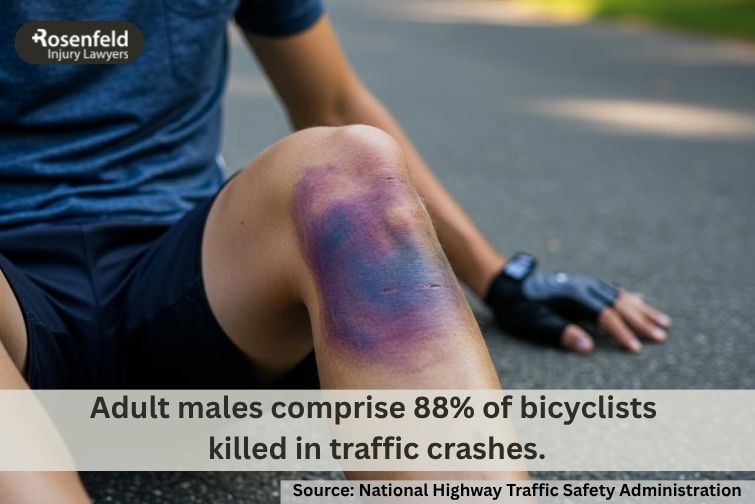
A cyclist has nothing between their body and the road. A collision at even moderate speed can cause fractures, brain injuries, or spinal damage that changes a person’s life permanently.
Illinois laws protect bikers’ rights on the roads. For example, bicycle riders have the right to use the road in many circumstances, as long as they stick to the right side of the road and use proper signaling techniques. If you follow the rules of the road properly, per municipal code 9-52-010, you have the same right to use the road as a driver in a motor vehicle. Understanding rider negligence vs driver negligence is also important for filing claims under Illinois Personal Injury Law.
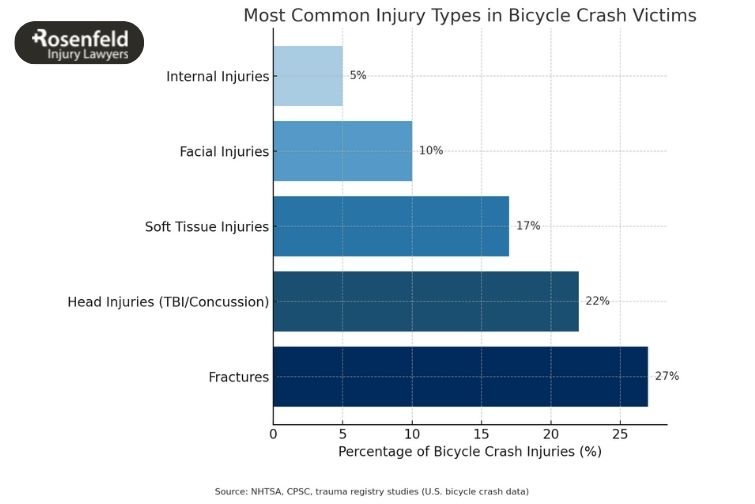
The head is especially vulnerable in bicycle accidents, particularly if the rider is not wearing a helmet. Even with protective gear, serious head injuries and significant facial trauma can occur.
The most serious risk is a traumatic brain injury. A TBI can cause lifelong memory, mood, and cognitive problems. A helmet reduces the odds of permanent damage. It does not eliminate them.
Concussions and other facial injuries are also common in bicycle crashes. Additional injuries may include skull fractures, skin lacerations, broken cheekbones, broken teeth, a broken nose, and road rash. Timely bicycle accident medical treatment and physical therapy are essential to reduce long-term bike injury effects. For riders dealing with serious injuries, understanding the options for suing a driver who hit you on your bike can also be an important part of the recovery process.
The spinal cord is a vital component of the skeletal and nervous systems. Damage to your neck or back could also cause lifelong conditions in a severe bicycle accident.
Whiplash is a common injury that is caused by the body being thrown in different directions abruptly, causing damage to the muscles or tendons of the neck. Soft tissue injuries, such as sprains and strains, are also possible.
Spinal cord injuries are the most serious damage you can suffer to your neck or back. Herniated discs, bulging discs, and spinal fractures all need emergency evaluation. In severe cases, damage to the cord causes partial or complete paralysis, which is permanent and life-altering.
Red flags: numbness, tingling, or weakness in your arms or legs. Loss of bladder or bowel control. If you have any of these, do not move and do not let anyone move you.
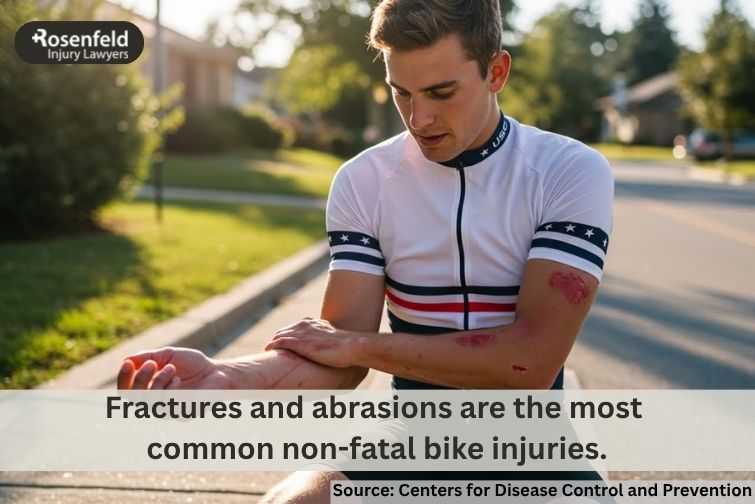
Since bicyclists are not protected by a vehicle’s shell, their upper extremities are vulnerable to significant damage. We often react to falls or collisions by putting our hands out to catch or protect ourselves, which may preserve our most important body parts but could damage our hands, arms, or shoulders. In complex cases, understanding how experts rebuild what happened in a bike crash can help clarify the sequence of events that led to these injuries.
Shoulder injuries are very common after a bicycle accident, especially if you land hard on your shoulder. You could suffer from a clavicle fracture or a dislocated shoulder.
You also have a significant chance of suffering broken bones in your arms if you are hit by a car, particularly in the humerus, radius, and ulna. Wrist and hand fractures can require a long healing process. A broken collarbone typically heals in 6 to 8 weeks. A wrist fracture can take 3 months or longer, and may need surgery.
Elbow injuries are also common. When the impact damages the nerves running through the arm, riders can be left with lasting numbness, tingling, or loss of grip strength, even after the bone has healed.
Your lower extremities are equally vulnerable, particularly if struck directly by a vehicle or crushed between objects. Pelvic fractures and broken hips can affect mobility permanently, and severe damage to these joints may require multiple surgeries and months of physical therapy.
Broken bones in the legs are common when a cyclist is struck by a moving vehicle, most often the femur, tibia, and fibula. Knee injuries may involve torn ligaments or a torn meniscus. Ankle and foot fractures are also frequent, and often take longer to heal than riders expect. Looking at how bike riding risks compare to driving can provide additional context for understanding the vulnerability cyclists face in collisions with motor vehicles.
In the most severe collisions, particularly those involving trucks or buses, a crushed limb cannot be saved. Amputation and loss of limb is rare, but it is the outcome cyclists fear most, and it carries lifelong medical and financial consequences.
Some injuries fall outside the categories above. Road rash happens when skin is dragged across pavement. It looks superficial and is often dismissed as a scrape, but deep road rash can require skin grafts, scar permanently, and become infected if it is not properly cleaned and dressed.
Lacerations are common. So is internal organ damage: broken ribs, internal bleeding, and injury to the lungs, liver, or spleen. These are the injuries that kill cyclists who walked away from the scene, because internal bleeding can present hours later with no visible wound.
Eye injuries are easy to overlook. Road debris, shattered glass, or blunt impact to the orbital bone can cause vision loss that is permanent if it is not treated within hours.
Whether it’s a broken leg, internal bleeding, or a traumatic brain injury (TBI) bicycle accident, cyclists may face severe psychological effects. PTSD, anxiety, or depression can result even without visible physical harm. These mental health impacts are a key part of pain and suffering bicycle injury claims.
No matter the severity, immediate bicycle accident medical treatment is critical. Severe injuries may require emergency medical treatment to prevent lasting harm.
Adrenaline masks pain. Riders regularly walk away from a crash feeling fine and wake up the next morning barely able to move. Brain injuries, internal bleeding, and soft tissue damage often show no symptoms at the scene.
Get examined the same day, even if you feel okay.
When to go to the ER immediately
Internal bleeding and brain injuries can present hours after a crash with no visible wound. If any of these appear, do not wait until morning.
Following your doctor’s treatment plan can also strengthen evidence for pursuing cyclist injuries compensation.
If you suffer from broken bones, brain injury, internal organ damage, or other common bicycle accident injuries in Chicago, you may have the right to pursue compensation for legal damages. You must prove that economic or non-economic losses were caused by someone else’s negligence.
Failing to follow certain rules, such as signaling intentions per code 9-52-045, can affect your eligibility for a claim. Potential damages may include lost wages, medical expenses, property damage, emotional distress, pain and suffering bicycle injury, and loss of enjoyment of life.
An experienced Chicago bicycle accident lawyer will investigate your claim, gather police reports, eyewitness accounts, video footage, and expert analysis, and handle negotiations with insurance companies. In some cases, your claim may proceed to Cook County Circuit Court, where the lawyer will provide full representation. Guidance on how to recover from a bike accident physically and financially can also help injured cyclists understand how medical, financial, and legal recovery may overlap after a serious crash.
Common injuries include fractures, head trauma, traumatic brain injury (TBI) bicycle accident, spinal injuries, and soft tissue damage. Early medical evaluation improves recovery and supports bicycle injury claims in Chicago.
Head injuries range from concussions to traumatic brain injury (TBI). Even mild trauma may cause long-term neurological symptoms and require bicycle accident medical treatment.
Yes, minor injuries such as fractures, lacerations, or soft tissue trauma can qualify for cyclist injuries compensation, including medical costs and pain and suffering bicycle injury.
Settlements vary based on severity, medical costs, lost wages, and long-term bike injury effects. Experienced lawyers ensure fair compensation under Illinois Personal Injury Law.
A Chicago bicycle accident lawyer can manage documentation, prove liability, and help maximize cyclist injuries compensation. Their expertise is critical in complex bicycle injury claims in Chicago.
Healing depends on injury type and severity. Minor fractures may heal quickly, while severe bike crash injuries, TBI, or spinal injuries can require months or years of physical therapy and rehabilitation medicine.
Yes, and it is common. Adrenaline masks pain for hours after a crash. Concussions, internal bleeding, and soft tissue damage often produce no symptoms at the scene. Get examined the same day even if you walked away feeling okay.
A worsening headache, confusion, vomiting, numbness or tingling in the limbs, difficulty breathing, or abdominal pain. Any of these means go to an emergency room now, not tomorrow. Brain injuries and internal bleeding can appear hours later with no visible wound.
Road rash, broken collarbones, and wrist fractures. When you fall, you instinctively put a hand out, which sends the force of the impact straight up your arm into your collarbone. Head injuries are also common, including when a helmet was worn.
Even with proper gear and rule-following, riding a bicycle on streets can be dangerous. Our Illinois bicycle accident injury law firm helps pursue compensation for permanent scarring, dental injuries, fractures, or severe bike crash injuries.
The consultation is free and you owe us nothing unless we recover money for you. Call 312-646-3708.
 Legally Reviewed By
Attorney Jonathan Rosenfeld
Reviewed by Attorney Jonathan Rosenfeld The material on this page has been legally reviewed by Attorney Jonathan Rosenfeld of Rosenfeld Injury Lawyers LLC. Mr. Rosenfeld and his team have experience representing injured cyclists in bicycle accident cases in Chicago. With a focus on personal injury law, they help bicycle accident victims understand their legal options and pursue compensation for medical expenses, lost wages, and other damages resulting from their injuries.