
Chicago Bicycle
Accident Lawyer
Accident Lawyer
Injured in a Bicycle Accident? We Can Help.



If you are the victim of a bicycle accident in Illinois due to someone else’s negligence, you have the right to seek compensation for your losses. While many of the consequences of a bicycle accident are financial, this does not cover the entire scope of the impact on your life. One category of losses you may qualify for is pain and suffering damages from a bike accident.
Calculating pain and suffering damages in a Chicago bicycle accident depends heavily on the severity of your injuries and their long-term impact on your everyday life. Under Illinois personal injury law, these non-economic damages ensure cyclists receive fair financial compensation for both immediate physical trauma and lasting emotional distress.
At Chicago Bike Injury Lawyers, we stand with cyclists across the Windy City and Illinois who are living with chronic pain and emotional distress after a bicycle crash. A pain and suffering bicycle accident lawyer in Chicago can help you pursue compensation for the physical, emotional, and psychological effects of a serious bicycle accident.
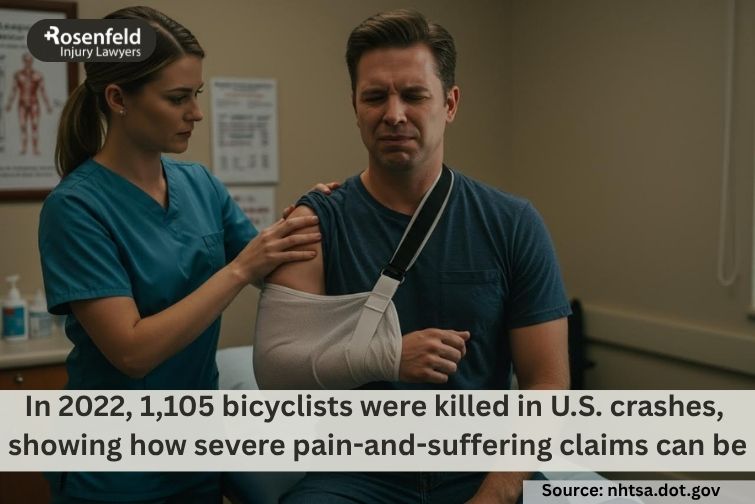
Pain and suffering damages can refer to various circumstances that the victim is experiencing. Pain and suffering damages Illinois courts recognize may include both physical discomfort and long-term emotional consequences resulting from an accident. According to the Illinois Pattern Jury Instructions under code §30.05, a measure of damages can be assessed that includes past and future pain and suffering as a result of the injuries.
This loss falls under the larger category of non-economic damages, which can include physical pain, emotional anguish, mental trauma, and loss of quality of life. These bicycle accident non-economic damages often account for losses that are difficult to measure financially but significantly impact daily life. For cyclists who have been hurt in a motor vehicle accident, victims of serious bicycle accident injuries may experience ongoing limitations that affect their physical health, relationships, and independence. symptoms like nerve pain, sleeplessness, an inability to return to riding, and PTSD after a hit-and-run could all be considered under pain and suffering. Many cyclists also develop chronic pain bicycle accident symptoms that continue long after their physical injuries have healed.
Pain and suffering, along with other non-economic losses, are often calculated with one of two methods. Here is how your settlement value may be assessed:
The value of a bicycle accident settlement pain and suffering award often depends on the severity of the injury, recovery time, and long-term impact on the victim’s life.
Our attorneys can help you prove pain and suffering with the following types of evidence:
Evidence supporting a pain and suffering claim in a bicycle accident case may also include photographs, personal journals, and statements from family members describing changes in the victim’s daily life.
Other types of damages after a bike collision include the following:
If you miss time at work because of the injuries you suffered, you can recover lost income from the legal claim. This could also include losses for a diminished ability to work in the future. These losses may be included as part of broader bicycle accident injury compensation sought through a legal claim.
Costs associated with diagnosis and treatment, such as emergency room visits, surgery, medication, rehabilitation, and therapy, can be included in the payout. Future medical expenses can also be assessed.
An emotional distress loss may include PTSD, depression, anxiety, self-harm, suicide ideation, or a fear of riding a bike. Bicycle accident emotional distress can affect every aspect of a victim’s life, including personal relationships, employment, and overall well-being.
While broken bones may heal, some injuries and mental traumas may prevent the victim from finding joy in life the way they did before the incident, resulting in Loss of Enjoyment of Life. A cyclist injury pain compensation claim may include damages for physical discomfort, emotional suffering, and long-term lifestyle limitations.
According to crash statistics compiled by the Illinois Department of Transportation, traffic collisions in urban corridors frequently lead to severe non-economic losses. Reviewing localized figures, such as the IDOT City Summaries and official Chicago Crash Summary Data, highlights how high-impact bicycle and vehicle accidents routinely result in substantial pain and suffering claims.
Our law firm is committed to supporting victims of bicycle accidents, including those who are in physical pain or struggling with emotional trauma. We believe in empathy over aggression and will fight for your case, seeking acknowledgment of what you have endured.
A pain and suffering bicycle accident lawyer in Chicago can help gather evidence, document your recovery, and pursue the compensation you deserve.
Our legal services include:
We also help establish the extent of your Pain and Suffering and other Non-Economic Damages through strong supporting evidence.
Our team works to secure a fair Insurance Settlement that reflects the full impact of your injuries and recovery challenges.
We have secured numerous settlements for past clients, including $2.25 million for a commuter struck on her way to work and $1 million for a woman involved in a dooring accident. Our attorneys work on a contingency fee basis, so you owe nothing unless we win.
Contact us today at 312-646-3708 to schedule a free consultation.
Working with a pain and suffering bicycle accident lawyer in Chicago can improve your ability to recover fair compensation through a Personal Injury Claim.
Pain and suffering damages compensate injured cyclists for physical pain, emotional hardship, mental anguish, and reduced quality of life resulting from injuries sustained in a bicycle accident.
Insurance companies and courts often consider injury severity, recovery duration, medical treatment, long-term limitations, and the overall effect the injuries have on daily activities.
Yes. Emotional distress, such as anxiety, depression, PTSD, fear of cycling, and other psychological effects, may be included when seeking compensation after a bicycle accident.
Medical records, therapist evaluations, treatment history, pain journals, witness statements, photographs, and expert testimony can help demonstrate the impact of pain and suffering.
Yes. Cyclists experiencing permanent pain, physical limitations, or lasting discomfort may seek compensation for the long-term effects these injuries have on their lives.
Severe fractures, traumatic brain injuries, spinal cord injuries, nerve damage, chronic pain conditions, disfigurement, and emotional trauma often support pain and suffering claims.
Insurance companies review medical evidence, treatment duration, injury severity, recovery progress, expert opinions, and documentation showing how injuries affect everyday activities and well-being.
Pain and suffering in Illinois personal injury claims is typically calculated using either the multiplier method (multiplying total economic damages by a number between 1.5 and 5) or the per diem method (assigning a daily dollar rate for every day of recovery). The exact amount depends on injury severity, required medical treatment, and overall impact on your quality of life.
Strong evidence for pain and suffering includes comprehensive medical records, doctor testimony, psychological evaluation reports, personal pain journals, prescription history, and statements from family members detailing changes in your daily activities and mobility.
No. Illinois does not place a statutory limit or cap on non-economic damages—including pain and suffering—in personal injury lawsuits. You are entitled to pursue full and fair compensation based on the actual severity of your physical pain and emotional trauma.
Yes. Illinois follows a modified comparative negligence rule (735 ILCS 5/2-1116). As long as you were less than 50% at fault for the accident, you can still recover compensation for pain and suffering, though your total settlement will be reduced proportionately by your percentage of fault.
 Legally Reviewed By
Attorney Jonathan Rosenfeld
Reviewed by Attorney Jonathan Rosenfeld The material on this page has been legally reviewed by Attorney Jonathan Rosenfeld of Rosenfeld Injury Lawyers LLC. Mr. Rosenfeld and his team have experience representing injured cyclists in bicycle accident cases in Chicago. With a focus on personal injury law, they help bicycle accident victims understand their legal options and pursue compensation for medical expenses, lost wages, and other damages resulting from their injuries.